WANT TO SAVE THIS RECIPE?
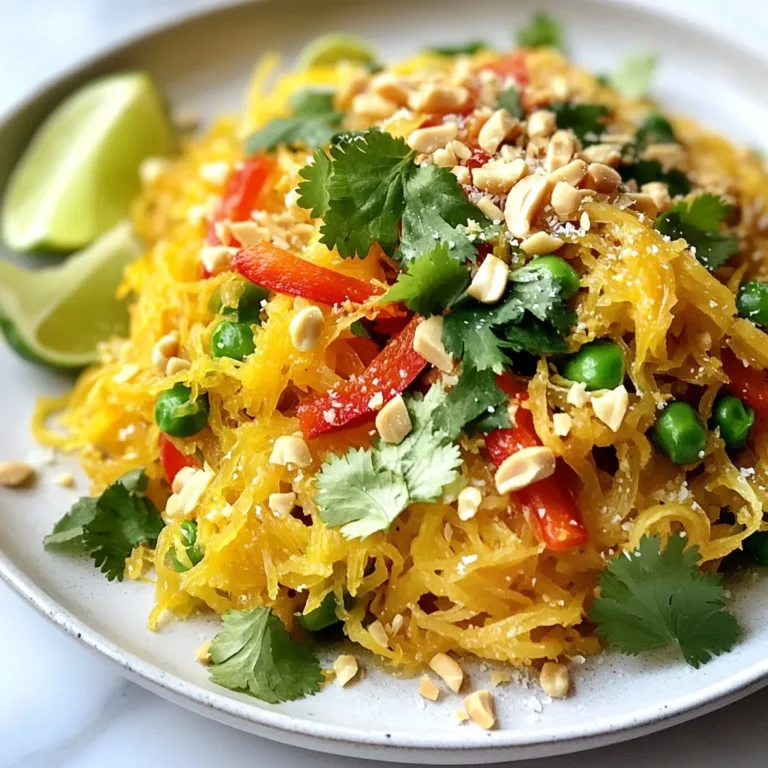
Are you ready to transform your dinner routine? This Spaghetti Squash Pad Thai recipe brings bold flavors and hearty texture without the carbs. I’ll guide you through each step, from prepping the squash to adding your favorite proteins. With simple ingredients and easy instructions, you’ll impress your family without spending hours in the kitchen. Let’s dive into this flavorful adventure!
Why I Love This Recipe
- Healthy Alternative: Using spaghetti squash instead of traditional noodles makes this dish lighter and packed with nutrients.
- Quick and Easy: This recipe can be prepared in under an hour, making it perfect for busy weeknights.
- Flavorful and Satisfying: The combination of tamarind, soy sauce, and lime juice creates a deliciously tangy sauce that elevates the dish.
- Customizable: You can easily swap in your favorite vegetables or proteins, making it versatile for any taste preference.
Ingredients
Main Ingredients
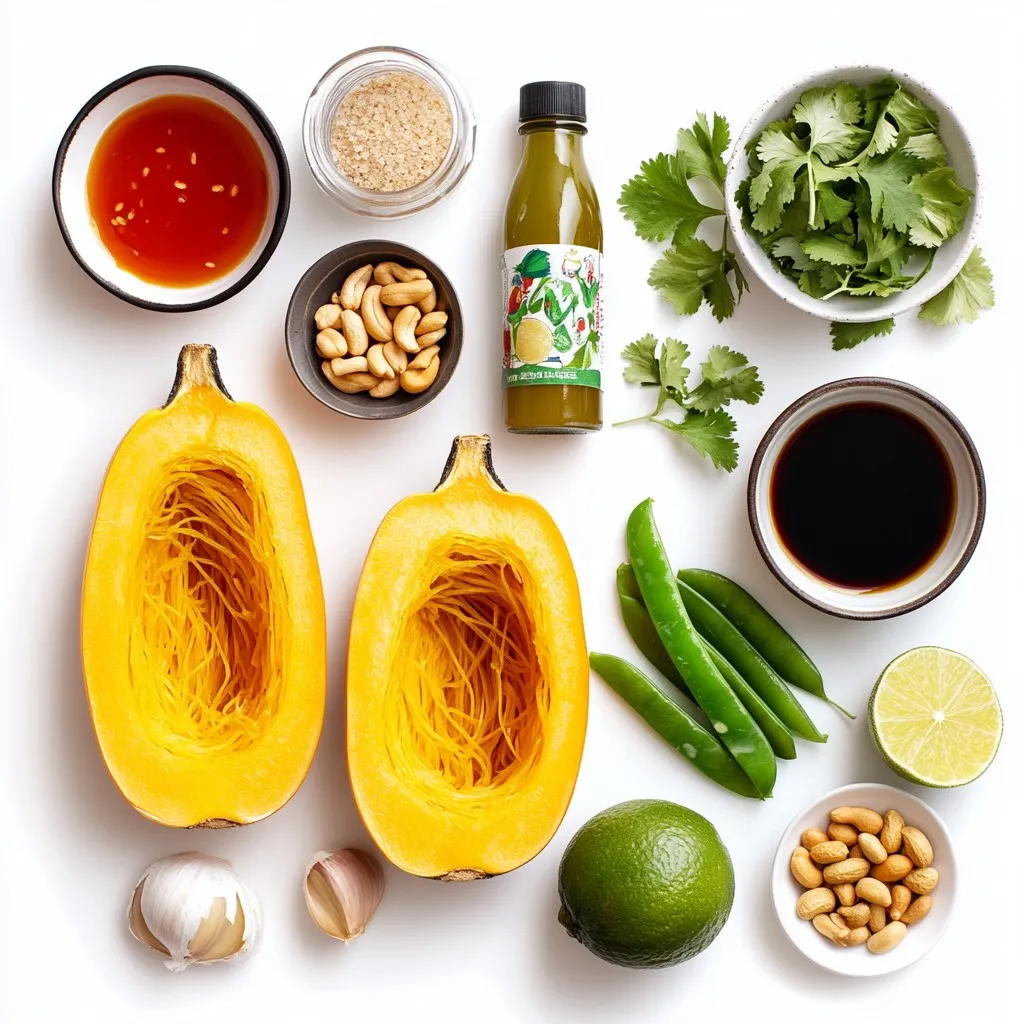
– 1 medium spaghetti squash
– 2 tablespoons peanut oil (or alternative cooking oil)
– 2 cloves garlic, finely minced
– 1 red bell pepper, cut into thin strips (julienned)
– 1 cup snap peas, trimmed and tails removed
– 2 green onions, sliced diagonally
– 2 large eggs, beaten until smooth
– 3 tablespoons soy sauce
– 2 tablespoons tamarind paste
– 1 tablespoon light brown sugar
– 1 tablespoon fresh lime juice
– 1/4 cup crushed peanuts (for a crunchy finish)
– Fresh cilantro leaves, for garnishing
– Lime wedges, for serving
Optional Ingredients
– Additional vegetables (e.g., carrots, bean sprouts)
– Proteins (e.g., chicken, shrimp, tofu)
– Gluten-free soy sauce options
When I make Spaghetti Squash Pad Thai, I love using fresh ingredients. The key is the spaghetti squash. It gives a great texture that mimics noodles. I use peanut oil because it has a nice flavor. Garlic adds depth, and red bell pepper gives sweetness. Snap peas add crunch, while green onions bring a fresh taste.
Eggs are important too. They add protein and help bind the dish. The sauce makes it special. I use soy sauce for saltiness and tamarind paste for tang. A touch of brown sugar balances the flavors, and lime juice gives a nice zing.
For toppings, I always add crushed peanuts for crunch and fresh cilantro for brightness. Lime wedges on the side are a must. You can add other veggies or proteins if you like. Carrots and bean sprouts are good choices. Chicken, shrimp, or tofu work well too. If you need gluten-free, use tamari instead of soy sauce.

Step-by-Step Instructions
Prepping the Spaghetti Squash
– First, preheat your oven to 400°F (200°C). This helps the squash cook evenly.
– Next, take a sharp knife and cut the spaghetti squash in half lengthwise. Be careful!
– Use a spoon to scoop out the seeds. This makes your squash nice and clean.
– Drizzle a bit of peanut oil on the cut sides. This adds flavor and helps with roasting.
– Place the squash cut-side down on a baking sheet lined with parchment paper.
– Roast in the oven for 30 to 40 minutes. It’s done when it’s soft and easy to pierce with a fork.
Cooking the Ingredients
– While the squash roasts, heat 2 tablespoons of peanut oil in a large skillet over medium heat.
– Add 2 minced garlic cloves and sauté them for about 1 minute. The garlic should smell great but not brown.
– Toss in 1 chopped red bell pepper and 1 cup of snap peas. Stir-fry these for about 3 to 4 minutes. You want them tender but still crispy.
– Push the veggies to one side of the pan. Pour in 2 beaten eggs on the open side. Scramble the eggs until just set. Then mix them with the veggies.
– Now, in a small bowl, whisk together 3 tablespoons of soy sauce, 2 tablespoons of tamarind paste, 1 tablespoon of brown sugar, and 1 tablespoon of lime juice. This sauce is key for flavor!
– Pour the sauce over the sautéed veggies and eggs. Stir well to coat everything evenly.
Combining Everything
– Once the spaghetti squash is cool enough, take a fork and scrape out the strands into the skillet.
– Gently toss the squash with the vegetable and egg mix. Make sure the strands are well coated with the sauce.
– Lastly, add 2 sliced green onions to the skillet. Cook everything for another 2 to 3 minutes. This helps meld the flavors together.
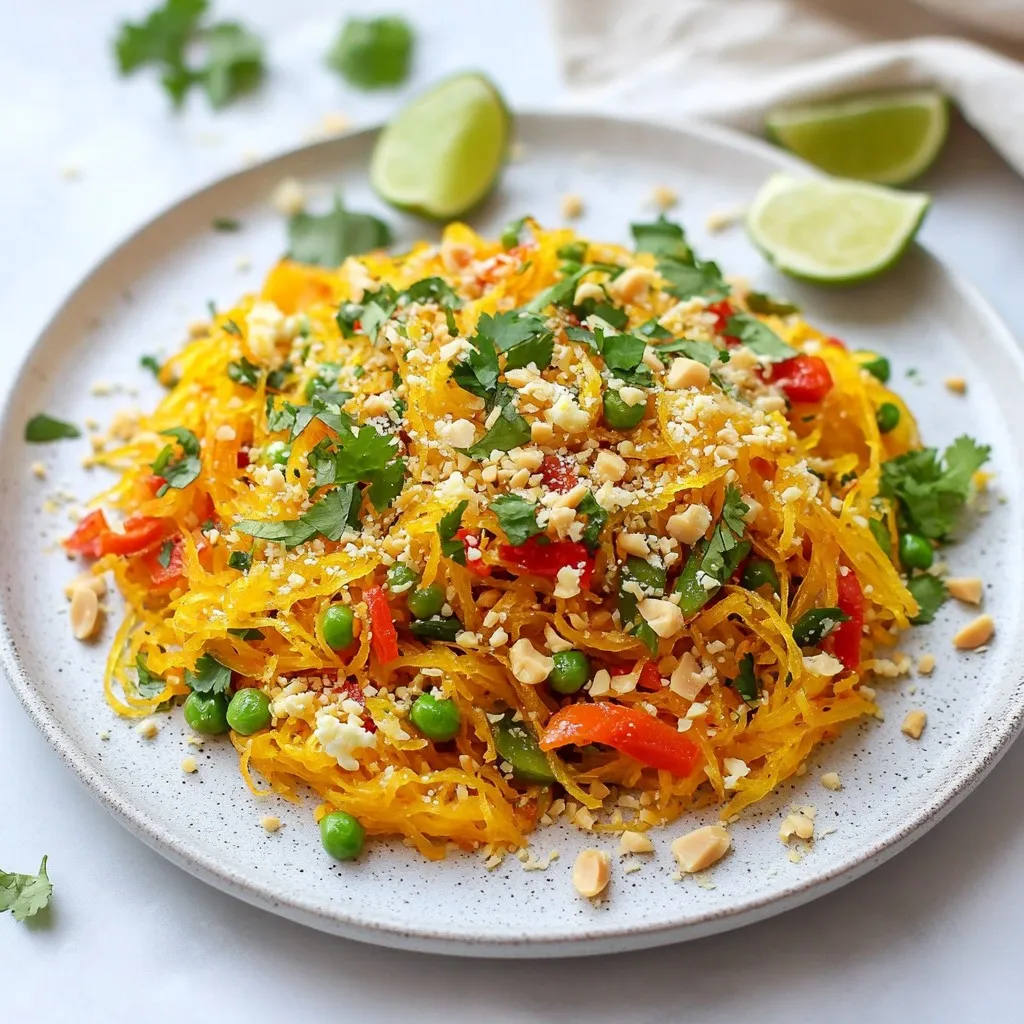
– Serve your Spaghetti Squash Pad Thai on plates. Top with crushed peanuts and fresh cilantro leaves. Don’t forget lime wedges on the side for extra zest!
Tips & Tricks
Perfecting Spaghetti Squash Pad Thai
Roasting your spaghetti squash is key. I cut it in half and remove the seeds. I drizzle peanut oil on the cut sides. Place it cut-side down on a baking sheet. This ensures even roasting. Bake at 400°F for about 30-40 minutes. You want it tender and easy to pierce with a fork.
Next, taste your dish as you cook. You may want more soy sauce, tamarind, or lime juice. Adjust the flavors to fit your taste. This will make your Pad Thai just right.
Meal Prep Strategies
Meal prep can save you time. Chop your veggies ahead of time. Keep them in the fridge for easy access. You can also whisk your sauce in advance. This way, you can just pour it in when you cook.
For storage, let leftovers cool before placing them in containers. Use airtight containers to keep them fresh. When reheating, use a skillet over medium heat. This keeps the texture nice and avoids mushiness.
Serving Suggestions
Pair your Spaghetti Squash Pad Thai with fresh lime wedges. A simple side salad with cucumbers and carrots is refreshing. You can also serve it with spring rolls for extra crunch.
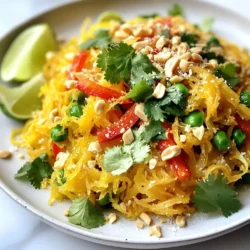
Presentation matters, so use a large bowl or plate. Garnish with crushed peanuts and cilantro. This adds color and makes your dish look stunning. The bright greens and yellows pop, making it inviting and fun to eat.
Pro Tips
- Choosing the Right Squash: Look for a spaghetti squash that feels heavy for its size and has a firm skin. This indicates freshness and better flavor.
- Enhancing the Flavor: For an extra depth of flavor, consider adding a splash of fish sauce to the sauce mixture. It adds a savory umami kick that complements the dish beautifully.
- Customizing Vegetables: Feel free to swap in your favorite vegetables like carrots, broccoli, or zucchini. This recipe is versatile and can be tailored to your preference.
- Perfect Scramble: When scrambling the eggs, make sure not to overcook them. They should be soft and creamy to blend well with the other ingredients.
Variations
Alternative Ingredients
You can make this dish suit your needs. For vegan options, skip the eggs. You can add tofu for protein and texture. Use soy sauce or tamari for a gluten-free dish.
Flavor Enhancements
Want more kick? Add some chili flakes or fresh jalapeños. You can also try different sauces, like hoisin or sweet chili, for unique flavors.
Nutritional Modifications
If you want fewer carbs, spaghetti squash is a great choice. You can also add chicken, shrimp, or chickpeas for extra protein. This way, you have a balanced meal that fills you up.
Storage Info
Best Practices for Storing Leftovers
– Refrigeration guidelines: Let the Spaghetti Squash Pad Thai cool down to room temperature. Then, place it in an airtight container. Store it in the fridge for up to four days. This keeps the flavors fresh and the texture nice.
– Freezing instructions: If you want to freeze it, use a freezer-safe container. It can last for up to three months in the freezer. Just make sure to separate the squash strands from the sauce a bit. This helps keep the texture when you thaw it.
How Long It Lasts
– Shelf life in the fridge: In the fridge, your Pad Thai lasts about four days. After that, it might start to lose flavor and texture.
– Signs of spoilage: Always check for off smells or a change in color. If it looks slimy or has mold, it’s best to toss it. Safe eating is key!
FAQs
Can I use other types of squash?
Yes, you can use other squashes. Zucchini or butternut squash work well. Just cut them into thin strips. Cooking times may vary. For zucchini, sauté for 3-5 minutes. For butternut squash, roast for about 25-30 minutes until tender.
Is Spaghetti Squash Pad Thai gluten-free?
Yes, Spaghetti Squash Pad Thai can be gluten-free. Use gluten-free soy sauce instead of regular soy sauce. Check the tamarind paste label for gluten-free options. The rest of the ingredients are naturally gluten-free, making this dish safe for those with gluten sensitivities.
How to reheat leftovers properly?
To reheat, use a skillet over medium heat. Add a splash of water or oil. Stir frequently to keep it moist. You can also microwave it for 1-2 minutes. Stir halfway through to heat evenly. Enjoy the same great flavors and texture!
What are the nutritional benefits of spaghetti squash?
Spaghetti squash is low in calories and high in fiber. It has fewer carbs than traditional noodles. This squash is also rich in vitamins A and C. It supports healthy digestion and can help with weight management. Enjoy a tasty dish that is good for you!
You’ve learned how to make a delicious Spaghetti Squash Pad Thai. We covered key ingredients, step-by-step instructions, and helpful tips to make it a breeze. You can also explore variations to suit your tastes and dietary needs. Remember to store leftovers properly for the best flavor. Try this fun and healthy twist on a classic dish. It’s a great way to enjoy flavors while keeping it nutritious! Your kitchen adventures awai
Spaghetti Squash Pad Thai
A healthy twist on traditional Pad Thai using spaghetti squash instead of noodles.
Prep Time 15 minutes mins
Cook Time 45 minutes mins
Total Time 1 hour hr
Course Main Course
Cuisine Thai
Servings 4
Calories 300 kcal
- 1 medium spaghetti squash
- 2 tablespoons peanut oil
- 2 cloves garlic, finely minced
- 1 red bell pepper cut into thin strips
- 1 cup snap peas, trimmed
- 2 large eggs, beaten
- 3 tablespoons soy sauce
- 2 tablespoons tamarind paste
- 1 tablespoon light brown sugar
- 1 tablespoon fresh lime juice
- 0.25 cup crushed peanuts
- to taste fresh cilantro leaves
- to serve lime wedges
Preheat your oven to 400°F (200°C).
With a sharp knife, carefully cut the spaghetti squash in half lengthwise. Scoop out the seeds using a spoon. Drizzle a little peanut oil over the cut surfaces and place them cut-side down on a baking sheet lined with parchment paper. Roast in the oven for 30-40 minutes, or until the squash is tender and easily pierced with a fork.
While the squash is roasting, heat the peanut oil in a large skillet or wok over medium heat. Add the minced garlic and sauté for about 1 minute, or until the garlic is fragrant but not browned.
Toss in the chopped red bell pepper and snap peas; stir-fry for approximately 3-4 minutes until the vegetables are tender yet still crispy.
Push the vegetables to one side of the pan, creating space for the eggs. Pour the beaten eggs into the open side of the skillet. Scramble the eggs until they are just set, then mix them thoroughly with the vegetables.
In a small mixing bowl, whisk together the soy sauce, tamarind paste, brown sugar, and lime juice until smooth. Pour this sauce mixture over the sautéed vegetables and scrambled eggs, stirring well to ensure everything is evenly coated.
Once the spaghetti squash has cooled for a few minutes, use a fork to scrape out the strands into the skillet. Gently toss the squash with the vegetable and egg mixture, ensuring the strands are well coated with the sauce.
Add the sliced green onions to the skillet and cook for an additional 2-3 minutes, allowing everything to heat through and flavors to meld.
Turn out your Spaghetti Squash Pad Thai onto plates, garnishing generously with crushed peanuts and fresh cilantro leaves. Serve with lime wedges on the side.
Feel free to adjust the vegetables based on your preference.
Keyword healthy, pad thai, spaghetti squash, vegetarian
WANT TO SAVE THIS RECIPE?