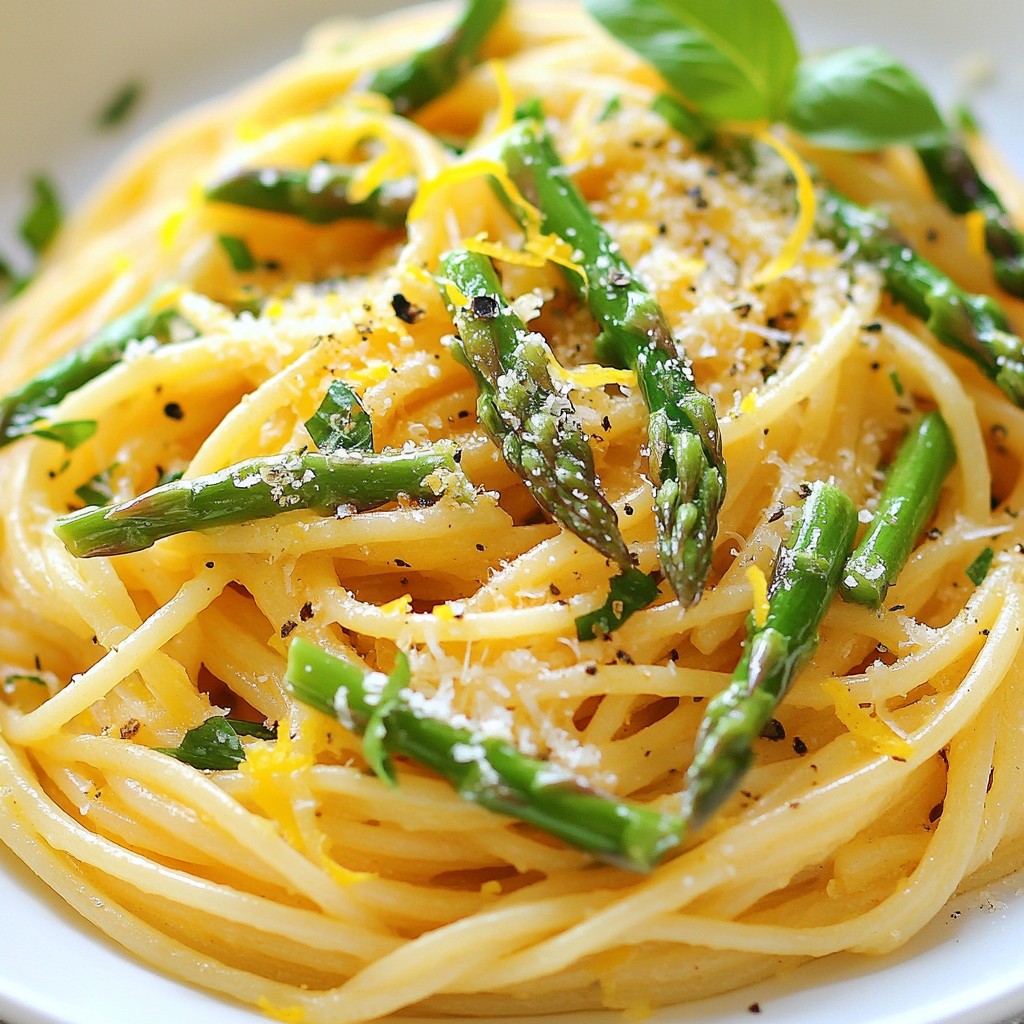
Looking to energize your dinner routine? Lemon Garlic Asparagus Pasta is a vibrant choice that delivers a burst of flavor in every bite. This dish combines fresh asparagus and zesty lemon for a simple, yet tasty meal. I’ll guide you through easy steps, helpful tips, and variations to fit your needs. Get ready to impress your taste buds and enjoy a feel-good plate that’s quick to make!
Why I Love This Recipe
- Fresh and Vibrant: The combination of asparagus and lemon makes this dish incredibly refreshing, perfect for spring or summer dining.
- Quick and Easy: Ready in just 25 minutes, this recipe is perfect for busy weeknights when you want a delicious homemade meal without the fuss.
- Customizable: Adjust the spice level with red pepper flakes and add or omit Parmesan cheese for a vegetarian option or a creamier texture.
- Garnish for Greatness: Finishing the dish with fresh basil and extra lemon zest elevates the presentation and adds a burst of flavor.
Ingredients
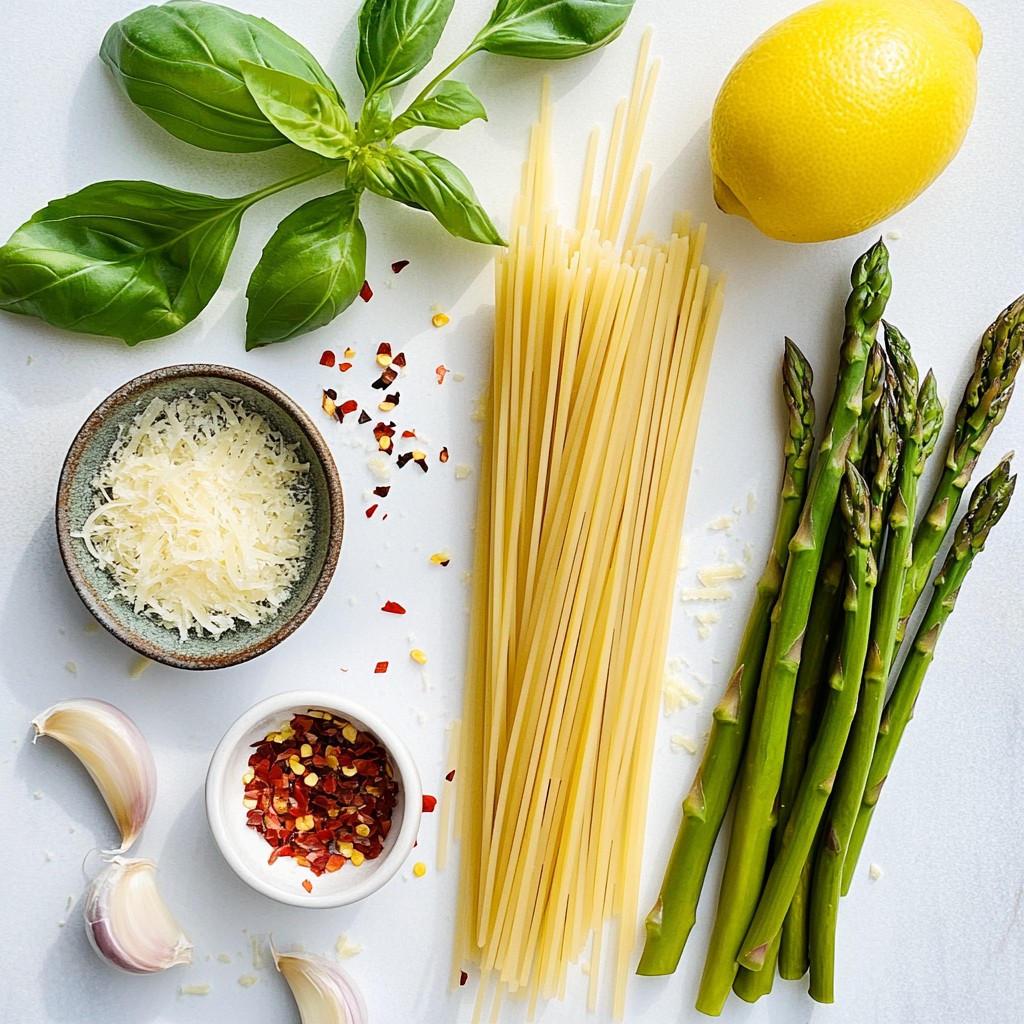
List of Ingredients
- 8 oz spaghetti or linguine
- 1 bunch of fresh asparagus, trimmed and cut into 2-inch pieces
- 3 tablespoons extra virgin olive oil
- 4 cloves garlic, finely minced
- Zest of 1 large lemon
- Juice of 1 large lemon
- 1 teaspoon crushed red pepper flakes
- 1/2 cup grated Parmesan cheese (optional)
- Salt and freshly cracked black pepper to taste
- Fresh basil leaves, for garnishing
Recommended Brands or Types
- Pasta: I love using Barilla for spaghetti or linguine. It cooks evenly and tastes great.
- Olive Oil: Choose a high-quality extra virgin olive oil like California Olive Ranch. It adds rich flavor.
- Parmesan Cheese: Use Parmigiano-Reggiano for the best taste. It has a wonderful nutty flavor.
Optional Ingredients for Variations
- Protein: Add grilled chicken or sautéed shrimp for a heartier meal.
- Vegetables: Try adding cherry tomatoes or spinach for extra color and nutrients.
- Herbs: Fresh parsley or dill can give a nice twist to the dish.
Step-by-Step Instructions
Cooking the Pasta
Start by filling a large pot with water. Add a good amount of salt to the water. Bring it to a rolling boil. Carefully add 8 ounces of spaghetti or linguine. Cook it for 8-10 minutes, or until it is al dente. This means it should be firm yet tender. Before draining, save about 1 cup of the water. This starchy water helps the sauce later. Drain the pasta and set it aside in a bowl.
Blanching the Asparagus
Use the same pot of boiling water. Add the fresh asparagus pieces, cut into 2-inch sections. Cook them for about 3 minutes. You want them bright green and tender-crisp. Don’t overcook! Quickly move the asparagus to a bowl of ice water. This stops the cooking process and keeps the color. After a minute, drain the asparagus and set it aside.
Sautéing the Garlic
In a large skillet, pour in 3 tablespoons of extra virgin olive oil. Heat it on medium. Once hot, add 4 cloves of finely minced garlic and 1 teaspoon of crushed red pepper flakes. Stir for 1-2 minutes. You want the garlic to be fragrant and slightly golden. Be careful not to burn it, as burnt garlic tastes bitter.
Combining the Ingredients
Now, add the blanched asparagus to your skillet. Toss it gently in the garlic oil. Then, add the drained pasta, the zest of one lemon, and the juice of that lemon. Mix everything well. If it looks dry, add some reserved pasta water. Do this a little at a time until you like the creaminess.
Seasoning and Serving
Taste your pasta to see if it needs seasoning. Add salt and freshly cracked black pepper to your liking. If you want, sprinkle in 1/2 cup of grated Parmesan cheese. Toss everything one last time to mix it well. Remove the skillet from heat and let it sit for one minute. Serve the pasta in bowls, garnished with fresh basil leaves and more lemon zest. Enjoy the bright, energizing flavors!
Tips & Tricks
How to Achieve Perfectly Cooked Pasta
To cook pasta just right, use plenty of salted water. Bring it to a rolling boil before adding the spaghetti or linguine. Follow the package's time for al dente, usually 8-10 minutes. This means the pasta should be firm but not hard. Reserve about one cup of the pasta water before draining. This starchy water can help make your sauce creamy later.
Adjusting Spice Levels in the Dish
For a mild dish, use less crushed red pepper flakes. Start with half a teaspoon, taste, and adjust if needed. If you like it spicy, feel free to add more! Just remember, you can always add more spice, but it’s hard to take it away. Balance is key, so sample the dish as you go.
Storage Tips for Leftovers
Store any leftover pasta in an airtight container. It stays fresh in the fridge for up to three days. To reheat, add a splash of water or olive oil to keep it moist. Microwave in short bursts, stirring in between. If you want to save it longer, freeze it. Just make sure to let it cool first, and it can last for up to three months.
Pro Tips
- Use Fresh Asparagus: Opt for the freshest asparagus you can find; it should be bright green, firm, and not wilted for the best flavor and texture.
- Adjust the Spice Level: Feel free to modify the amount of crushed red pepper flakes based on your spice tolerance. Start with less and add more if desired.
- Enhance the Lemon Flavor: For a more intense lemon flavor, consider adding a bit of lemon juice at the end just before serving.
- Perfect Pasta Water: Don't forget to reserve some pasta water! It's a great way to adjust the sauce consistency without adding extra oil.
Variations
Adding Protein (e.g., chicken, shrimp)
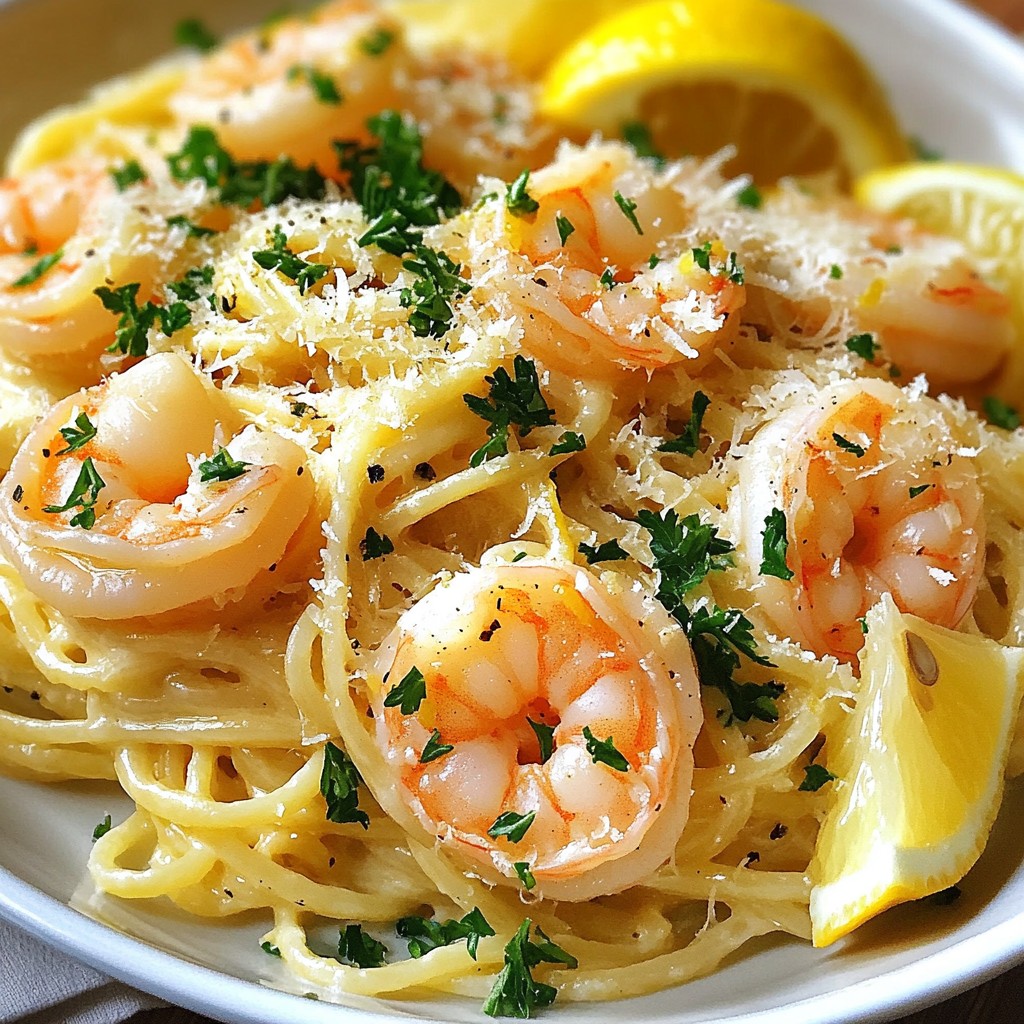
You can make this dish heartier by adding protein. Chicken or shrimp works well. For chicken, use cooked, diced breast. Toss it in with the pasta and asparagus. For shrimp, sauté them in the garlic oil until they turn pink. Then mix them in. Both options add flavor and make the meal more filling.
Vegetarian and Vegan Adaptations
This pasta dish can easily fit vegetarian or vegan diets. For vegetarians, just skip the cheese or use a plant-based cheese. If you’re vegan, replace the Parmesan with nutritional yeast. It gives a nice cheesy taste without dairy. You can also add extra veggies like bell peppers or mushrooms to enhance the dish.
Alternative Vegetables or Herbs
Feel free to switch up the veggies. Broccoli, zucchini, or snap peas can replace asparagus. Just adjust the cooking time to keep them crisp. For herbs, fresh parsley or dill can add a new twist. Mix in these flavors to keep the dish exciting and fresh.
Storage Info
How to Store Leftover Pasta
To store leftover pasta, let it cool first. Place the pasta in an airtight container. Make sure to include any sauce or veggies. This helps keep the flavors strong. Store it in the fridge for up to three days.
Reheating Instructions
When you want to eat the pasta again, take it out of the fridge. You can reheat it in a few ways:
- Microwave: Place the pasta in a microwave-safe bowl. Add a splash of water or olive oil. Cover it with a damp paper towel. Heat for 1-2 minutes, stirring halfway.
- Stovetop: Heat a skillet over medium heat. Add the pasta with a bit of water. Stir often until it's warmed through.
Freezing Instructions
If you want to keep pasta longer, freezing is a great option. First, let the pasta cool completely. Divide it into single servings. Place each serving in a freezer bag or container. Make sure to remove as much air as possible. Label the bags with the date. You can freeze it for up to three months. When ready to eat, thaw in the fridge overnight and reheat as explained above.
FAQs
What can I use if I don't have asparagus?
If you can't find asparagus, try green beans or broccoli. Both work well with lemon and garlic. You can also use zucchini or snap peas for a fresh taste. Each option adds a unique crunch and flavor to the dish.
Can I make this dish gluten-free?
Yes, you can make this dish gluten-free! Use gluten-free pasta instead of regular spaghetti or linguine. Many brands offer great options that hold up well in this recipe. Just cook the gluten-free pasta according to the package directions.
How can I enhance the flavors further?
To enhance the flavors, add more garlic or lemon juice. A pinch of fresh herbs, like thyme or parsley, brings brightness. You can also add a splash of white wine while sautéing the garlic for depth. For a kick, try a sprinkle of smoked paprika.
What wine pairs well with Lemon Garlic Asparagus Pasta?
A crisp white wine pairs best with this dish. Look for a Sauvignon Blanc or a Pinot Grigio. Both wines complement the lemon and garlic flavors, making your meal feel even more special. Enjoy a glass while cooking for added fun!
This guide gives you all the details to make Lemon Garlic Asparagus Pasta. We covered the key ingredients, cooking steps, and tips for perfect results. I also shared fun ways to change this dish to fit your taste. With these ideas, you can store and reheat leftovers easily.
Cooking should be fun and stress-free. Now, go enjoy your meal with great flavors!