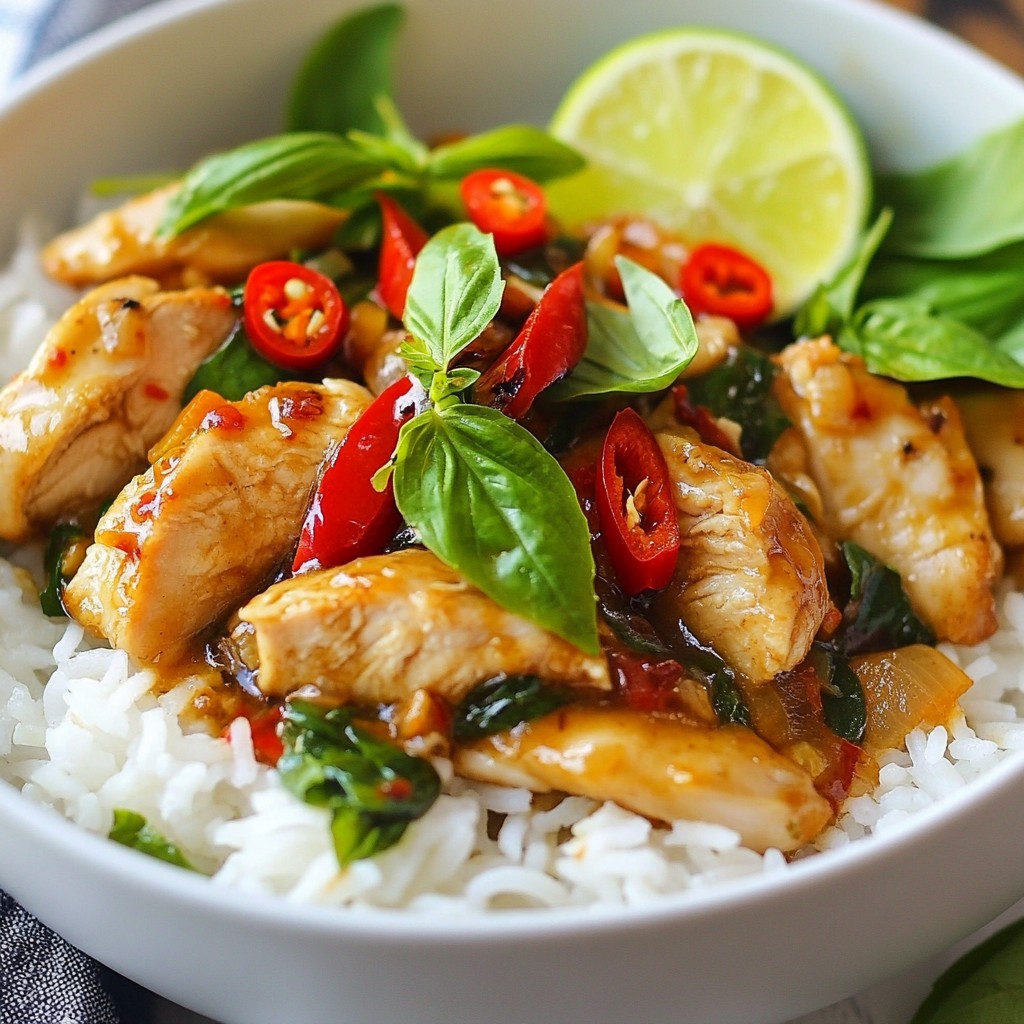
Looking for a quick and tasty meal? Thai Basil Chicken is your answer. In just a few steps, you can whip up this flavorful stir-fry that bursts with fresh ingredients. Whether you're cooking for family or just yourself, this dish is simple, satisfying, and bursting with flavor. Join me as I break down everything you need to know to create this delicious Thai favorite right in your kitchen!
Why I Love This Recipe
- Quick and Easy: This recipe comes together in just 20 minutes, making it perfect for busy weeknights.
- Flavor Explosion: The combination of soy sauce, fish sauce, and fresh Thai basil creates a dish bursting with authentic Thai flavors.
- Customizable Heat: Adjust the number of red chilies to your spice preference, allowing everyone to enjoy it at their own comfort level.
- Healthy and Delicious: With lean chicken and fresh herbs, this dish is a nutritious option that doesn't compromise on taste.
Ingredients
Main Ingredients for Thai Basil Chicken
- 500g boneless chicken thighs, thinly sliced
- 1 cup fresh Thai basil leaves, loosely packed
- 3 cloves garlic, minced
- 2 shallots, thinly sliced
- 2 tablespoons vegetable oil
- 2 red chilies, sliced (adjust for spice preference)
- 2 tablespoons soy sauce
- 1 tablespoon oyster sauce (optional but recommended for depth)
- 1 tablespoon fish sauce
- 1 teaspoon sugar
- 1/2 teaspoon freshly ground black pepper
To make Thai Basil Chicken, you need a few key items. The chicken thighs give this dish a juicy and tender bite. Fresh Thai basil adds a unique flavor that makes this dish pop. Garlic and shallots bring warmth and depth to every bite. The sauces, like soy and fish, are the backbone of the rich taste.
Optional Add-ins
- Sliced chilies for a kick
- Tofu or shrimp for protein swaps
You can add a bit of heat with sliced chilies. If you want a different protein, try tofu or shrimp. Both options work well and taste great.
Serving Suggestions
- Cooked jasmine rice, for serving
- Lime slices for garnish
- Extra fresh basil for presentation
Serve your Thai Basil Chicken over warm jasmine rice. This lets the sauce soak into the rice. Garnish with lime slices for a zesty touch. Adding more basil on top can make your dish look even better.
Step-by-Step Instructions
Preparation Steps
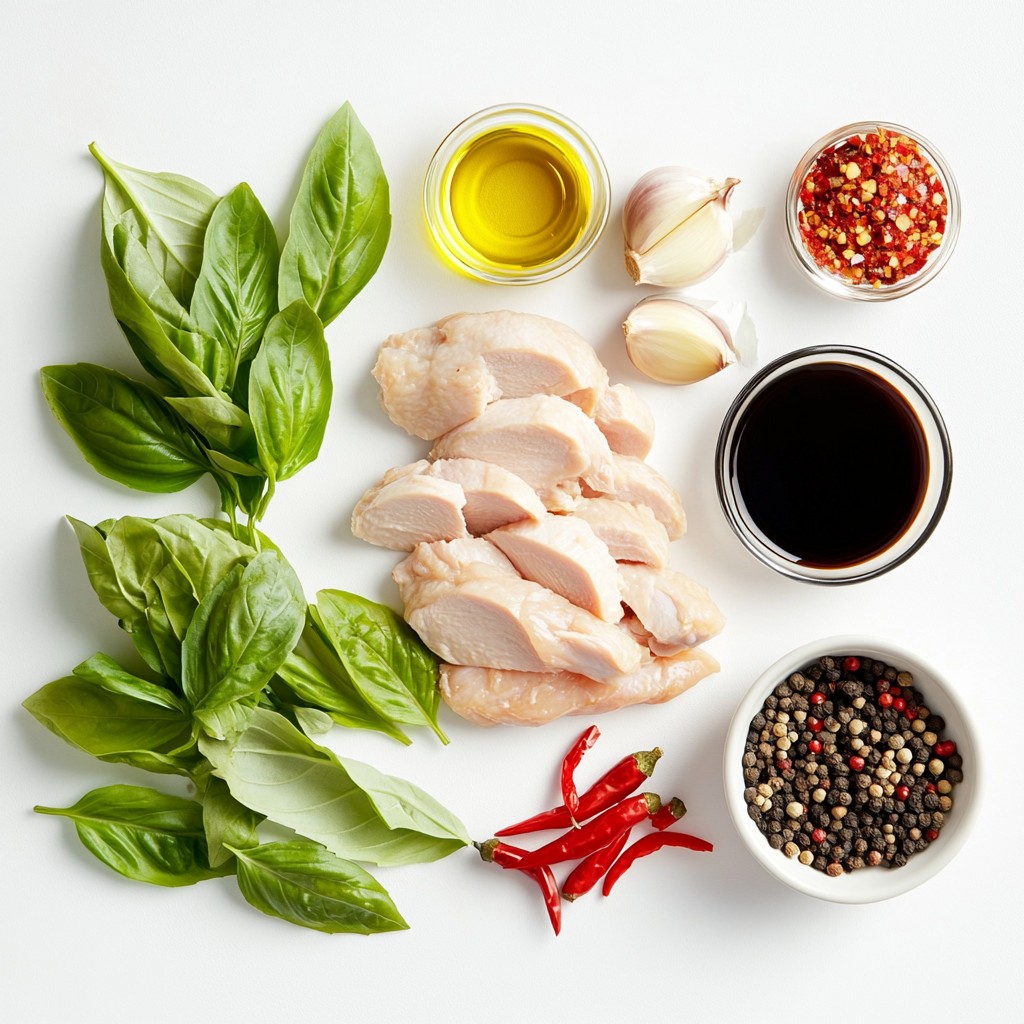
Start by gathering all your ingredients. You need:
- 500g boneless chicken thighs, thinly sliced
- 1 cup fresh Thai basil leaves, loosely packed
- 2 tablespoons vegetable oil
- 3 cloves garlic, minced
- 2 shallots, thinly sliced
- 2 red chilies, sliced (adjust for spice preference)
- 2 tablespoons soy sauce
- 1 tablespoon oyster sauce (optional but recommended for depth)
- 1 tablespoon fish sauce
- 1 teaspoon sugar
- 1/2 teaspoon freshly ground black pepper
- Cooked jasmine rice, for serving
Chop the garlic and shallots first. Thinly slice the chicken thighs. Slice red chilies based on your spice level. This prep makes cooking quick and easy.
For the best flavor, use fresh ingredients. Fresh Thai basil adds a sweet, peppery taste. Make sure your chicken is cut evenly for uniform cooking.
Cooking Instructions
Heat the vegetable oil in a large skillet or wok over medium-high heat. Wait until it shimmers.
Add the minced garlic and sliced shallots. Stir-fry these for about 30 seconds until fragrant. Don’t let them burn; that ruins the taste.
Next, turn the heat to high. Add the sliced chicken thighs to the skillet. Stir-fry for 3-4 minutes. The chicken should turn light golden-brown and no longer pink.
Now, add the sliced red chilies. Pour in the soy sauce, oyster sauce (if using), fish sauce, sugar, and black pepper. Stir well. Cook for another 2 minutes. This helps the sauce thicken and coat the chicken evenly.
Finishing Touches
Remove the skillet from the heat. Gently fold in the fresh Thai basil leaves. Stir until the basil wilts, about 30 seconds. This keeps its bright flavor and color.
Serve the Thai basil chicken over warm jasmine rice. Let the sauce soak into the rice for extra flavor. A burst of color and taste awaits you!
Tips & Tricks
Cooking Techniques
Stir-frying and sautéing are both quick cooking methods. The main difference is the heat level. Stir-frying uses high heat, while sautéing uses medium heat. Stir-frying cooks food quickly and gives it a nice char. Sautéing is slower and focuses on softening ingredients.
For quick and easy cooking, prepare all your ingredients first. Cut the chicken, chop the garlic, and slice the shallots before you start. This way, you can cook without stopping. Use a hot pan to sear the chicken fast. Keep stirring the food so it cooks evenly.
Enhancing Flavor
Adjust spice levels to your taste. If you like it hot, add more chilies. For a milder dish, use fewer. Taste the sauce as you cook. This helps you find the right balance of flavors.
Fresh herbs are key in Thai cooking. Thai basil adds a unique flavor that dried herbs can't match. Always add the herbs at the end of cooking. This keeps their bright taste and color vibrant.
Presentation Ideas
To make your dish look great, use a deep bowl for serving. This allows you to layer the rice and chicken nicely. Garnish with fresh Thai basil leaves on top. A slice of lime adds a pop of color and flavor.
Colors matter! Use red chilies and bright green basil. This draws the eye and makes the dish appealing. Textures count too; the crunch from the chilies and the tender chicken create a delightful contrast.
Pro Tips
- Use Fresh Ingredients: Always opt for fresh Thai basil and high-quality chicken for the best flavor and texture in your dish.
- Control the Spice Level: Adjust the amount of red chilies based on your preference; you can remove the seeds for a milder dish.
- Perfect Rice Cooking: Ensure your jasmine rice is fluffy and well-cooked to complement the saucy chicken; a rice cooker can be a great help!
- Garnish for Appeal: A few extra fresh basil leaves and a lime wedge not only enhance presentation but also add a fresh burst of flavor when served.
Variations
Alternative Proteins
You can swap chicken for other proteins. Beef is a great choice. Thinly slice it like the chicken. Tofu is also a nice option. Use firm or extra-firm tofu for the best texture. Just cube it and stir-fry until golden. You can even add mixed vegetables. Broccoli or snap peas work well. This keeps the dish colorful and healthy.
Vegetarian & Vegan Options
To make a plant-based Thai Basil Chicken, focus on vegetables and tofu. Use the same sauce and spices. For a vegan sauce, replace oyster sauce with mushroom sauce. This keeps the umami flavor without animal products. You can also add more veggies like bell peppers or carrots. This makes the dish filling and tasty.
Regional Variations
Thai cuisine has many local twists. In some regions, they use different herbs, like mint or cilantro, instead of basil. Others might add peanuts for crunch. Each area has its unique spin on this dish. Try adding local ingredients to make it your own. You can use lime leaves or lemongrass for extra flavor.
Storage Info
Proper Storage Techniques
To keep leftover Thai basil chicken fresh, first let it cool. Then, place it in an airtight container. I recommend using glass containers as they help keep flavors intact. You can store the dish in the fridge for up to three days. Make sure to label the container with the date so you remember when you made it.
Reheating Instructions
When it's time to enjoy your leftovers, use a skillet for reheating. Heat it over medium heat. Add a splash of water or broth to keep it moist. Stir often to make sure it warms evenly. Avoid using the microwave, as this can make the chicken soggy. If you must use the microwave, cover the dish with a damp paper towel to help retain moisture.
Freezing Recommendations
Yes, you can freeze Thai basil chicken! To freeze, pack it in a freezer-safe container or bag. Remove as much air as possible to prevent freezer burn. It can last up to three months in the freezer. When ready to eat, thaw it in the fridge overnight. Reheat it in a skillet for the best results. Avoid refreezing once it has been thawed to maintain quality.
FAQs
Common Questions
What is Thai Basil and how is it different from regular basil? Thai basil has a unique flavor that is sweet and spicy. Its leaves are darker and have purple stems. Regular basil, often used in Italian dishes, tastes more sweet and mild. Thai basil holds up better in cooking and adds bold taste to dishes like Thai Basil Chicken.
Can I use dried basil instead of fresh? While you can use dried basil, fresh basil is best for this dish. Dried basil lacks the bright flavor and aroma of fresh leaves. If you must use dried, use less than you would fresh. A good rule is one teaspoon of dried basil for every tablespoon of fresh.
Recipe Adjustments
How can I make this dish gluten-free? To make Thai Basil Chicken gluten-free, swap regular soy sauce for gluten-free soy sauce or tamari. Check the labels on your sauces, as some may contain gluten. Also, ensure any additional ingredients, like oyster sauce, are gluten-free.
What if I don’t have all the ingredients on hand? You can still make this dish! If you lack Thai basil, use regular basil or even cilantro. If you don’t have fish sauce, you can skip it or add more soy sauce. Adjust the flavors to your taste, and feel free to get creative!
Serving Suggestions
What to serve with Thai Basil Chicken? Serve Thai Basil Chicken over warm jasmine rice, as it soaks up the sauce well. You can also add a side of stir-fried veggies or a fresh salad for balance. A simple cucumber salad with lime can add a nice crunch.
Recommended drink pairings for this dish Pair this meal with a light beer or a refreshing iced tea. A cold, crisp white wine also works well. For non-alcoholic options, try coconut water or a sweet lime soda to complement the flavors.
Thai Basil Chicken offers a burst of flavor with simple steps. We covered main ingredients, cooking techniques, and various options. You learned how to enhance your dish with fresh herbs and spices. Plus, I shared tips on storage and reheating to keep flavors vivid.
This dish is versatile and caters to many tastes. Try new proteins or go plant-based. With a few adjustments, you can make this meal your own. Enjoy making and sharing your Thai Basil Chicken with friends and family.