
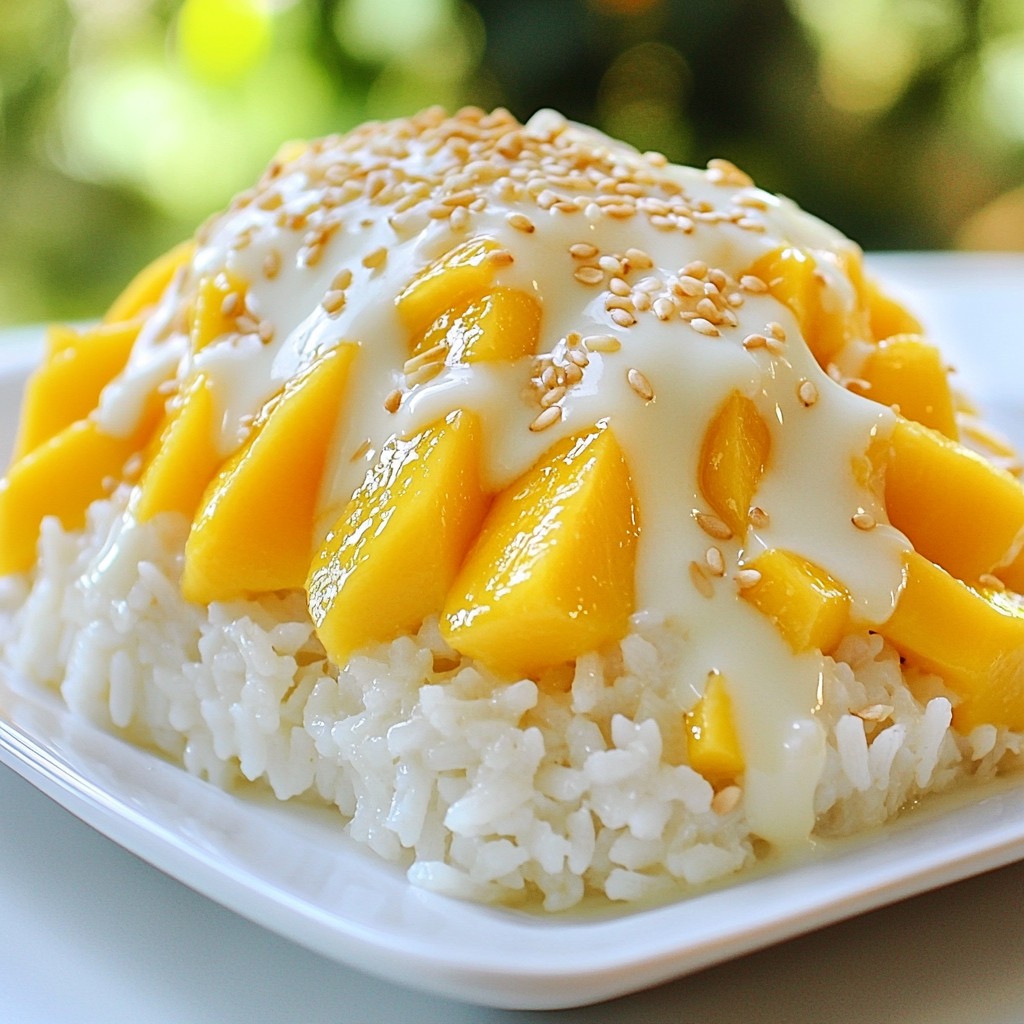
Are you ready to indulge in a sweet, creamy treat? Thai Mango Sticky Rice is a delightful dish that combines the rich flavors of coconut and ripe mango. In this easy recipe, I’ll guide you through each step, from selecting the best ingredients to serving the perfect plate. Get ready to impress your friends and family with this mouthwatering dessert that captures the essence of Thailand, all from your kitchen!
Why I Love This Recipe
- Deliciously Creamy: The combination of coconut milk and sticky rice creates a rich, creamy texture that is simply irresistible.
- Fresh and Fruity: The ripe mangoes add a fresh, sweet contrast that balances the richness of the dish beautifully.
- Easy to Make: Despite its gourmet appearance, this dessert is surprisingly simple to prepare with just a few ingredients.
- Perfect for Sharing: This recipe serves four, making it an ideal treat for gatherings, celebrations, or simply to enjoy with family.
Ingredients
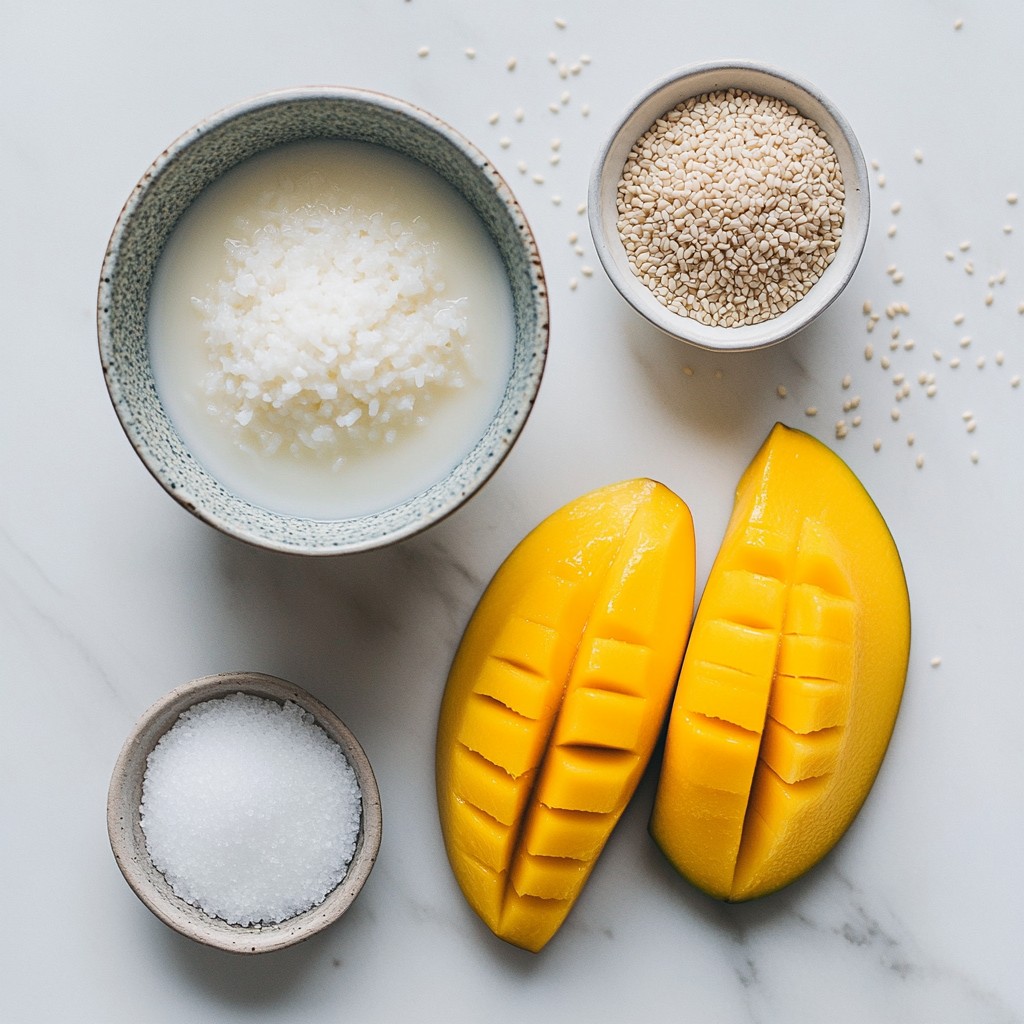
Essential Ingredients
- 1 cup glutinous rice (sticky rice)
- 1 ½ cups coconut milk
- ½ cup granulated sugar
- ½ teaspoon sea salt
To make Thai mango sticky rice, you need a few key ingredients. Glutinous rice is the base. This rice has the perfect texture for this dish. Coconut milk adds creaminess and flavor. Granulated sugar sweetens the coconut sauce. Sea salt helps balance the sweetness.
Fresh Components
- 2 ripe mangoes, peeled and thinly sliced
- Optional for garnish: sesame seeds or cooked mung beans
Fresh mangoes make this dish shine. Use ripe mangoes for the best taste. They should be sweet and juicy. You can also add garnishes like sesame seeds for crunch or cooked mung beans for a nutty touch. These extras bring fun textures and flavors to your meal.
Step-by-Step Instructions
Preparation of Sticky Rice
Rinsing the rice Start by rinsing the glutinous rice under cold water. This helps wash away excess starch. Continue rinsing until the water runs clear. This step is key for fluffy rice.
Soaking guidelines After rinsing, soak the rice in a bowl of water. Soak for at least 4 hours. For the best texture, try soaking it overnight. This softens the grains and makes them sticky when cooked.
Cooking the Sticky Rice
Steaming method Once soaked, drain the rice. Place it in a steamer lined with cheesecloth. This makes it easy to lift out. Steam the rice for about 25-30 minutes. It should look tender and sticky when done.
Testing for doneness To check if the rice is ready, look for a translucent appearance. It should feel soft when you touch it. If it’s still firm, steam for a few more minutes.
Making the Coconut Sauce
Ingredient combination While your rice cooks, make the coconut sauce. In a medium saucepan, mix coconut milk, sugar, and sea salt. This combination gives the sauce its rich flavor.
Heat instructions Warm the mixture over medium heat. Stir it consistently until the sugar fully dissolves. Be careful not to let it boil, as this changes the texture of the sauce.
Combining and Plating
Mixing rice with coconut sauce When the rice is done, transfer it to a mixing bowl. Pour the warm coconut sauce over the rice. Gently fold to combine, ensuring all rice is coated. Let it sit for 10-15 minutes to absorb the flavors.
Presentation tips To plate, shape a mound of rice in the center of a serving plate. Arrange the sliced mango beside it. Drizzle the reserved coconut sauce over both. For a fun touch, sprinkle sesame seeds or mung beans on top for extra crunch.
Tips & Tricks
Perfecting the Rice Texture
To get the best texture from your rice, soak it for at least 4 hours. Soaking overnight is even better. This step is crucial. It makes the rice soft and sticky.
When cooking, steam the soaked rice for 25 to 30 minutes. Check for tenderness. The rice should look translucent and feel sticky. You want it to be just right for that perfect bite.
Enhancing Flavor
Try using different mango varieties based on the season. Some are sweeter, while others are tangy. This change adds a new twist to your dish.
Balancing sweetness is key. If your mangoes are very sweet, use less sugar in the coconut sauce. Taste as you go. This ensures the flavors blend well together, creating a delicious treat.
Pro Tips
- Soaking Time Matters: For the best texture, soak the glutinous rice overnight. This allows the grains to fully absorb water, ensuring a perfect stickiness when cooked.
- Steaming Technique: When steaming the rice, ensure that the water in the steamer does not touch the rice. This prevents the rice from becoming too wet and helps maintain its sticky texture.
- Coconut Sauce Consistency: Be careful not to boil the coconut milk mixture while dissolving the sugar. Boiling can change the flavor and texture of the sauce, making it less creamy.
- Garnish for Texture: Adding sesame seeds or cooked mung beans not only enhances the visual appeal but also provides a delightful crunch that balances the creamy rice and sweet mango.
Variations
Alternative Ingredients
You can switch up the rice for your Thai Mango Sticky Rice. While glutinous rice is best, you can use jasmine rice. It won’t be as sticky, but it will still taste great.
For coconut milk, consider using almond or oat milk. These options give a different taste and are dairy-free. However, you lose some creaminess, so add a bit of oil for richness.
Flavor Enhancements
Want to add a twist? Try adding pandan leaves when making the coconut sauce. These leaves give a sweet, grassy flavor that pairs well with mango. Just remove them before serving.
You can also infuse your coconut sauce with ginger or lime. Just add a small piece of ginger or a few lime zest strips while heating. These flavors will brighten your dish and add a lovely zing.
Storage Info
Leftover Storage Tips
To keep your Thai mango sticky rice fresh, follow these simple steps:
- Refrigeration: Place the sticky rice and mango in an airtight container. Store it in the fridge for up to three days.
- Freezing: You can freeze the sticky rice for up to a month. Use a freezer-safe container or bag.
Reheating Methods
When you are ready to enjoy your leftovers, here are some best practices:
- Best practices for maintaining texture: For rice, steam it again to keep it sticky. You can also use a microwave with a splash of water to keep it moist.
- Tips for serving after storage: Serve with fresh mango slices and drizzle the coconut sauce on top. This brings back the dish's vibrant flavors.
FAQs
Common Questions
What is the best type of rice for sticky rice? The best type of rice for this dish is glutinous rice. This rice is also known as sticky rice. It has a high starch content. This helps create the desired sticky texture. You can find glutinous rice in Asian markets or online. Make sure to rinse it well before cooking.
Can I make Thai Mango Sticky Rice ahead of time? Yes, you can prepare Thai Mango Sticky Rice ahead of time. However, store the rice and mango separately. This keeps the rice from getting too wet. You can prepare the rice and coconut sauce a day before. When serving, just warm the rice slightly. Then, add the mango and drizzle with coconut sauce.
Serving Suggestions
What can be served as a side? For sides, I recommend fresh fruit. Sliced pineapple or berries work well. You can also serve a light salad. A cucumber salad adds a nice crunch. These sides balance the sweetness of the mango rice.
Pairing options with beverages For drinks, try coconut water for a tropical vibe. I also enjoy iced tea or Thai iced coffee. These drinks complement the rich flavors of the dish. You can also serve a light sparkling water. This adds a refreshing touch to your meal.
You now know the key ingredients and steps for making Thai Mango Sticky Rice. The essential items, like glutinous rice and coconut milk, are key to a tasty dish. I shared tips for perfecting texture and enhancing flavor. You can try variations with different ingredients too. Remember to store leftovers properly for future enjoyment. This treat is simple to prepare and full of joy. Get creative with your serving ideas and savor each bite!